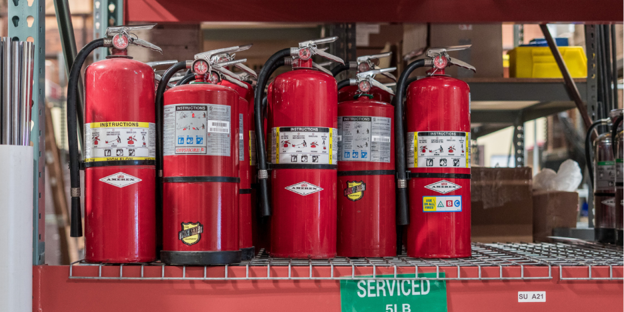
When To Replace Your Fire Extinguisher And How To Read Its Tag

Fire extinguishers are essential tools for safety, but they don’t last forever. Ensuring your extinguishers are in good condition can be the difference between quickly extinguishing a fire and facing a catastrophe. Here’s what you need to know about replacing and maintaining them.
When to Replace Your Fire Extinguisher
- Check the Manufacturing Date
Fire extinguishers typically have a lifespan of 15 to 18 years. Locate the manufacturing date, often found on the label or the cylinder’s base. If it’s over 15 years old, it’s time to replace it. - Inspect for Damage
Regularly inspect for visible signs of wear, including dents, rust, corrosion, broken handles, or a gauge needle outside the green zone. Any of these issues indicate it’s safer to replace the unit. - Consult Experts
If you’re uncertain, consult professionals like those at Encore Fire Protection. They provide high-quality extinguishers, advice, and ongoing maintenance, ensuring your equipment remains reliable.
How to Read a Fire Extinguisher Tag
Fire extinguisher tags provide vital safety information. Learning to interpret these tags helps you stay on top of maintenance and ensure the extinguisher is ready for use.
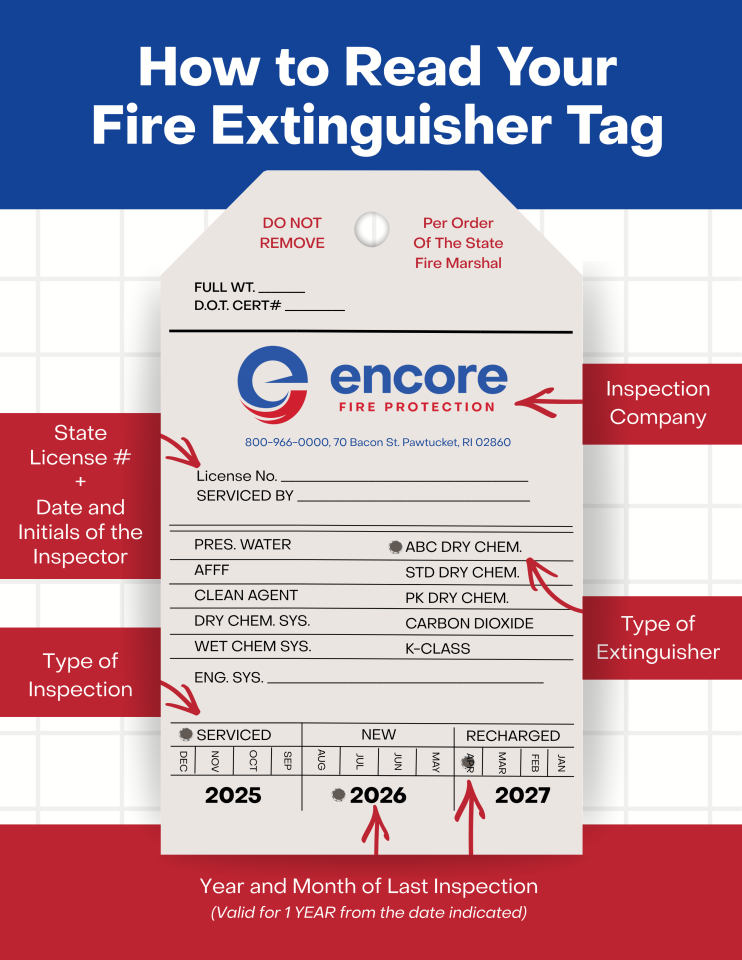
- Locate the Tag
Found near the handle or gauge, this paper tag displays key details like the inspector’s name, the extinguisher type, and the last inspection date.
- Understand the Extinguisher Type
Extinguisher types are indicated with letters:- A – Combustibles like wood and paper
- B – Flammable liquids
- C – Electrical equipment
- D – Combustible metals
- K – Kitchen fires
Use the correct type for specific fire hazards. Learn more about Fire Extinguisher Types.
- Inspect Dates and Expiration
The tag’s punched-out dates show when the extinguisher was last inspected. Most tags are valid for one year from the punched month and year. Check regularly to avoid expired extinguishers.
- Monthly Visual Checks
Perform monthly inspections by verifying the gauge pressure, checking for physical damage, and ensuring the tag is secure. Record the inspection date on the tag’s back. While not all jurisdictions require monthly checks, it’s a proactive way to maintain readiness.
Fire Extinguisher Ratings
Each extinguisher has a rating printed on its label, such as **1A:10B:C**, which denotes effectiveness against various fire types. Consult your local Authority Having Jurisdiction (AHJ) to confirm compliance with local requirements for homes, businesses, or other properties.
Why Regular Inspections Matter
Routine inspections ensure extinguishers are ready for emergencies. By identifying issues early, you can replace or repair extinguishers to prevent malfunctions during critical moments. Working with a licensed professional for annual inspections guarantees peace of mind.
Fire safety starts with preparedness. By knowing when to replace fire extinguishers and how to read their tags, you can help protect lives and property. For expert guidance and reliable services, reach out to fire safety professionals like Encore Fire Protection.
Latest Posts
Understanding OSHA Fire Safety Requirements for Businesses
A workplace fire can put employees at risk, damage property, and interrupt operations. Understanding OSHA fire safety requirements helps business owners address hazards and prepare…
What Is the Difference Between a Minor Maintenance Item and a Critical Compliance Violation?
When reviewing a fire protection or life safety inspection report, building owners and facility managers may see a variety of findings listed. Some issues may…
How Fire Extinguishers Work: A Simple Guide
Fire extinguishers are one of the most important pieces of safety equipment found in homes, offices, restaurants, warehouses, and just about everywhere else. While many…