How Engineering & Design Impact Fire Protection System Performance

When it comes to safeguarding people, property, and critical operations, fire protection systems are only as effective as the engineering and design behind them. While high-quality components and proper installation matter, it’s the planning phase that ultimately determines whether a system performs as intended during an emergency. Simply put, engineering and design impact fire protection system performance in ways that can mean the difference between containment and catastrophe.
Why Fire Protection Engineering Matters
Fire protection engineering goes far beyond selecting sprinklers and placing alarms. Engineers analyze how fire behaves in a specific environment and design systems that respond quickly, efficiently, and appropriately.
Key factors engineers evaluate include:
- Building occupancy and use
- Fire load and hazard classification
- Building layout, ceiling heights, and obstructions
- Water supply availability and pressure
- Local codes, NFPA standards, and AHJ requirements
Without proper engineering, even the most advanced fire protection equipment may fail to control a fire effectively.
The Role of System Design in Fire Protection Performance
System design translates engineering analysis into a practical, functional solution. Poor design can lead to delayed activation, insufficient water delivery, false alarms, or system failures. In contrast, well-designed systems work seamlessly with the building and its operations.
This is why engineering and design impact fire protection system performance at every stage of a building’s lifecycle, from initial construction to renovations and ongoing use.
Accurate Hazard Classification
Every building presents a unique fire risk. Engineering teams must correctly classify hazards (such as light hazard, ordinary hazard, or extra hazard) to ensure systems deliver the correct flow, pressure, and coverage.
An incorrect hazard classification can result in:
- Undersized systems that fail during a fire
- Oversized systems that waste resources and increase costs
- Code violations that delay approvals
Proper engineering ensures systems are neither overbuilt nor underperforming.
Hydraulic Calculations and Water Supply Design
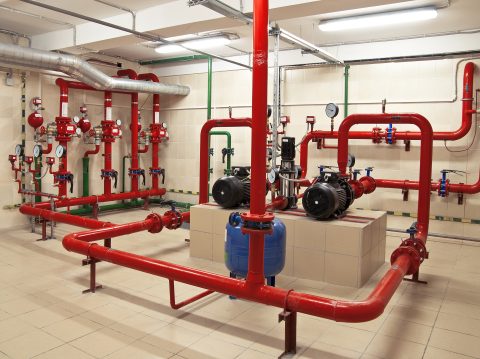
One of the most critical design elements is ensuring adequate water flow and pressure. Engineers perform detailed hydraulic calculations to verify that sprinklers receive sufficient water at the most remote points of the system.
Good design accounts for:
- Municipal water supply limitations
- Fire pumps and backup power
- Pipe sizing and layout efficiency
- Future building expansion
Without these calculations, a system may activate but fail to suppress the fire effectively.
Device Placement and Coverage
Strategic placement of sprinklers, detectors, alarms, and suppression devices is essential for timely response. Engineering teams consider ceiling types, airflow, obstructions, and room usage to ensure full coverage.
Poor placement can lead to:
- Delayed fire detection
- Incomplete sprinkler activation
- Blind spots that allow fires to grow
Thoughtful design ensures rapid detection and immediate suppression where it matters most.
Integration with Building Systems
Modern buildings rely on interconnected systems. Fire protection design must integrate with HVAC, electrical, security, and building automation systems.
Effective engineering ensures:
- Smoke control systems function properly
- Fire alarms communicate with mass notification systems
- Elevators respond correctly during emergencies
- Power shutdowns don’t compromise life safety
This coordination reinforces how engineering and design impact fire protection system performance beyond standalone components.
Compliance, Testing, and Long-Term Reliability
Code compliance doesn’t start and stop at simply passing inspections. The focus should always be about long-term performance. Engineers design systems to meet NFPA standards while also considering maintenance, testing access, and future modifications.
Well-engineered systems:
- Simplify inspections and testing
- Reduce nuisance alarms
- Adapt more easily to renovations
- Maintain performance over decades
This forward-thinking approach protects both occupants and building owners from costly failures down the line.
The Cost of Poor Engineering and Design
Cutting corners during engineering and design can lead to significant consequences, including:
- Increased risk to life and property
- Insurance complications or denied claims
- Code violations and failed inspections
- Expensive retrofits after occupancy
Investing in proper engineering upfront often saves time, money, and risk over the life of the system.
Custom Fire Protection Systems Designed to Deliver
Fire protection systems are not “one-size-fits-all” solutions. Their success depends on how well they are engineered and designed for the specific environment they serve. From hazard analysis to system integration, engineering and design impact fire protection system performance in every meaningful way.
Encore Fire Protection’s design team combines years of experience with the latest industry research to provide you with a value-engineered plan that accounts for current code requirements, optimal system performance, structural restrictions, placement of other utilities, and your final building aesthetics. Let us handle the engineering and design of your custom fire protection systems to ensure the quality and safety your property deserves.
Latest Posts
How Fire Extinguishers Work: A Simple Guide
Fire extinguishers are one of the most important pieces of safety equipment found in homes, offices, restaurants, warehouses, and just about everywhere else. While many…
Back-to-School Fire Safety: Protecting Students, Staff, and School Facilities
As students return to classrooms in the fall, schools become busy environments filled with learning, activities, and daily routines. While preparing for a successful academic…
How to Prepare for an AHJ Visit
If your building includes fire alarms, sprinkler systems, extinguishers, emergency lighting, kitchen suppression systems, or other life safety equipment, there is a good chance you…