How to Keep Your Fire Protection Systems Compliant

Fire protection equipment is not something businesses can install and then forget about. Sprinklers, alarms, fire extinguishers, suppression systems, and other life safety equipment require regular inspection, testing, maintenance, and documentation to stay compliant. Keeping your fire protection systems compliant year-round protects your people, reduces the risk of system failures, and helps you avoid code violations and costly downtime.
Businesses should understand that fire protection requirements can come from several sources. Federal OSHA regulations may apply to workplaces, while state and local jurisdictions may adopt versions of the International Fire Code (IFC), NFPA standards, and additional local requirements.
Know Which Fire Protection Standards Apply
There is no single fire protection rule that applies identically to every building. Requirements may depend on your location, occupancy type, building use, hazards, and installed equipment.
Important regulations and standards may include:
- OSHA 29 CFR 1910 Subpart L: Establishes federal workplace requirements addressing fire extinguishers, sprinkler systems, fixed suppression systems, fire detection systems, and employee alarm systems.
- NFPA 10: Provides standards for portable fire extinguishers.
- NFPA 25: Addresses inspection, testing, and maintenance of water-based systems such as fire sprinklers, standpipes, fire pumps, and related equipment. NFPA’s current 2026 edition continues to establish inspection, testing, and maintenance requirements for these systems.
- NFPA 72: Covers fire alarm and signaling systems, including their installation, inspection, testing, and maintenance.
- NFPA 2001: Applies to clean-agent fire extinguishing systems.
The 2024 International Fire Code also states that fire protection and life safety systems must be maintained in operative condition and inspected, tested, and maintained according to applicable referenced standards. However, businesses should verify which IFC and NFPA editions their local authority having jurisdiction, or AHJ, has adopted.
Keep Up With Fire Extinguisher Requirements
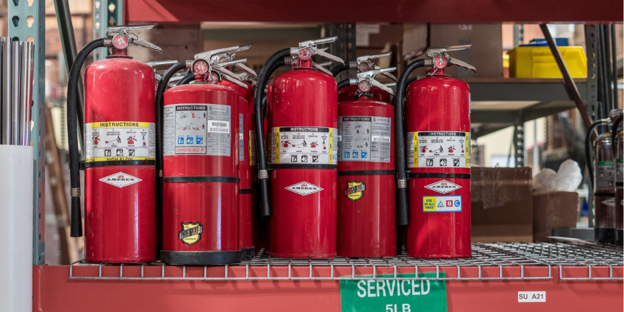
Portable extinguishers require more than an inspection tag hanging from the handle. Under OSHA 29 CFR 1910.157, employers covered by the standard are responsible for inspection, maintenance, and testing.
OSHA requires portable extinguishers to be visually inspected monthly and receive an annual maintenance check. Employers must record the annual maintenance date and retain that record for the required period. Certain stored-pressure dry chemical extinguishers are also subject to six-year maintenance and hydrostatic testing requirements.
Regular attention helps identify issues such as missing extinguishers, damaged components, low pressure, blocked access, or units that have been discharged.
Schedule Sprinkler and Alarm System Inspections
Keeping fire protection systems compliant also means following the appropriate inspection and testing schedule rather than waiting for an annual inspection to uncover every issue.
NFPA 25 establishes inspection, testing, and maintenance criteria for water-based fire protection systems. Depending on the component, required activities may occur at different intervals. Inspections can include checking control valves and other system components, while more extensive testing evaluates whether equipment performs properly when needed.
Fire alarms require similar attention. OSHA 29 CFR 1910.164 requires covered fire detection systems to be maintained in working condition and tested and adjusted often enough to maintain reliability. Servicing, maintenance, testing, cleaning, and sensitivity adjustments must be completed by qualified personnel when the OSHA standard applies.
Do Not Ignore Suppression Systems
Businesses with commercial cooking systems, clean-agent systems, dry chemical systems, or other specialized suppression equipment may have additional requirements.
For example, OSHA 29 CFR 1910.160 requires applicable fixed extinguishing systems to be inspected annually and maintained in operating condition. Refillable suppression-agent containers must have their weight and pressure checked at least semiannually.
Different systems may also fall under standards such as NFPA 17, NFPA 17A, NFPA 750, or NFPA 2001.
Maintain Detailed Fire Protection Records
Documentation is an important part of compliance. Maintain organized records of:
- Inspections and testing
- Maintenance and repairs
- Identified deficiencies
- Corrective actions
- System impairments
- Equipment replacements
- Contractor service reports
These records can help demonstrate compliance during an inspection and make it easier to track recurring problems.
Keep Your Fire Protection Systems Compliant With Professional Service
Fire safety compliance is a year-round responsibility. Regulations, adopted code editions, testing frequencies, and equipment requirements can vary considerably between properties.
Partner with Encore Fire Protection to establish appropriate inspection schedules, identify deficiencies, maintain accurate documentation, and address problems before they become larger compliance or safety concerns.
Latest Posts
Understanding OSHA Fire Safety Requirements for Businesses
A workplace fire can put employees at risk, damage property, and interrupt operations. Understanding OSHA fire safety requirements helps business owners address hazards and prepare…
What Is the Difference Between a Minor Maintenance Item and a Critical Compliance Violation?
When reviewing a fire protection or life safety inspection report, building owners and facility managers may see a variety of findings listed. Some issues may…
How Fire Extinguishers Work: A Simple Guide
Fire extinguishers are one of the most important pieces of safety equipment found in homes, offices, restaurants, warehouses, and just about everywhere else. While many…