A Year of Breakthroughs in Fire Suppression Technology

2025 was a landmark year for breakthroughs in fire suppression technology, bringing transformative changes to how we combat fires. Across the globe, the fire protection industry saw a marked improvement in fire suppression standards and technology, creating stronger safety systems and regulations that enhanced safety in commercial and industrial settings.
“Smart” Fire Suppression Technology
Fire suppression systems evolved significantly in 2025, with new tools and approaches designed to combat fires faster while minimizing damage.
One major trend was the development of “smart” sprinklers and hybrid suppression setups. Traditional sprinkler systems are being upgraded with multi-sensor capabilities and wireless links between sprinkler heads, allowing more targeted and coordinated response to a fire. By combining heat, flame, and smoke sensing, these smart sprinklers can respond earlier and more precisely than conventional systems.
Hybrid Systems Come to the Forefront
Hybrid suppression techniques gained traction as well, especially in commercial and industrial applications.
Rather than relying on water alone, many facilities started blending suppression agents. For example, using water mist in tandem with inert gas or foam to improve fire control. Water mist systems produce fine droplets that absorb heat efficiently with far less water usage, reducing water damage while still quenching flames. In fact, new “green” misting technologies can use up to 70% less water than old sprinklers, an eco-friendly advantage that is important to note.
When paired with clean agent gases (which chemically interrupt combustion) or high-expansion foams, these hybrid systems can both cool a fire and smother it, delivering a one-two punch. Such combinations proved especially useful in complex environments like data centers and industrial plants, where water alone might not be ideal.
Notably, the latest NFPA sprinkler standards in 2025 also expanded design guidance for large-volume spaces, specifying sprinkler types and layouts for very high ceilings (over 30 feet) based on occupancy risk with an update to NFPA 13. This helps protect modern warehouses and factories more effectively by ensuring even these vast areas get sufficient coverage.
Lithium-Ion Battery Safety is a Critical Concern
Another area of fire suppression technology innovation was fire protection for lithium-ion battery storage and other emerging hazards.
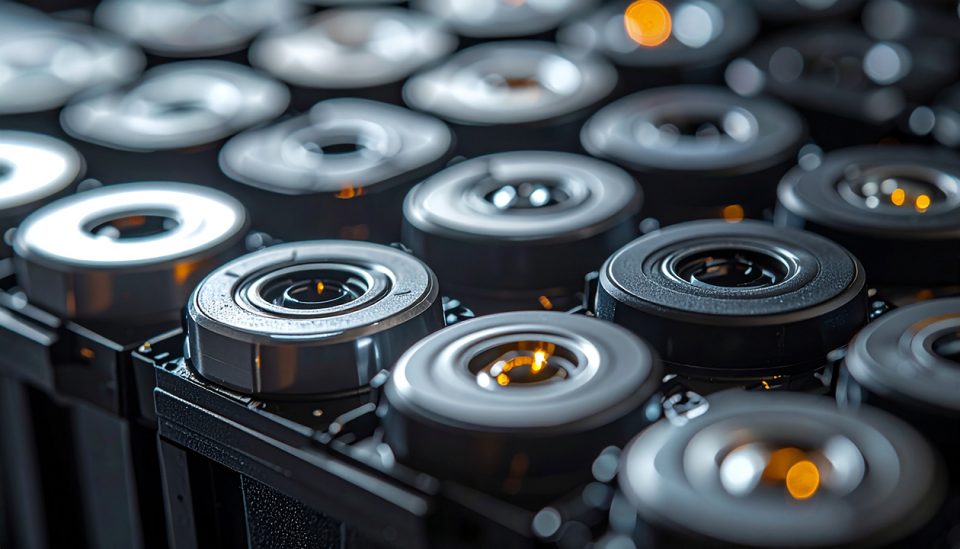
The rapid growth of renewable energy and electric vehicles means large Battery Energy Storage Systems (BESS) are now common in commercial facilities, and they pose unique fire risks. A lithium-ion battery fire can burn intensely and even reignite due to thermal runaway, so 2025 saw more sites installing specialized suppression systems for these scenarios.
Solutions include:
- Clean agent gases (e.g. NOVEC 1230 or FK-5-1-12).
- How they work: These systems can flood a battery room and extinguish flames without water (crucial for protecting sensitive electronics).
- Compact aerosol units (e.g. Stat-X canisters).
- How they work: Small canisters installed directly inside battery enclosures release fine particles that interrupt combustion. They are highly effective for confined spaces and recognized in standards like NFPA 2010.
- Inert gas systems (e.g. nitrogen).
- How they work: These systems purge oxygen from a sealed battery vault to halt any fire, though they require careful design for safety. They are effective for large-scale installations.
- A hybrid approach.
- How they work: A combination of traditional sprinklers (or water mist) provides cooling to prevent fire spread between battery cells, while clean agents finish the job by snuffing out the flames.
These advanced suppression strategies gave facility operators a fighting chance to control battery incidents, which was a hot topic in 2025’s fire protection discussions and the focus of NFPA’s Fire Prevention Week.
A Safer Future Forged in 2025
2025 was a major year for breakthroughs in fire suppression technology, marked by technological innovation, and improved safety practices. Fire suppression innovations have made commercial and industrial environments safer than ever before. Stronger codes and standards, developed in response to both tragedies and new technologies, are ensuring these advances are widely adopted and properly implemented. Perhaps most importantly, the effect of these trends is a world better prepared to prevent fires or contain them early, protecting lives, businesses, and the environment.
Contact Encore Fire Protection about upgrading your systems so that you can take advantage of some of the recent breakthroughs in fire suppression technology.
Latest Posts
How Fire Extinguishers Work: A Simple Guide
Fire extinguishers are one of the most important pieces of safety equipment found in homes, offices, restaurants, warehouses, and just about everywhere else. While many…
Back-to-School Fire Safety: Protecting Students, Staff, and School Facilities
As students return to classrooms in the fall, schools become busy environments filled with learning, activities, and daily routines. While preparing for a successful academic…
How to Prepare for an AHJ Visit
If your building includes fire alarms, sprinkler systems, extinguishers, emergency lighting, kitchen suppression systems, or other life safety equipment, there is a good chance you…